Disappearing into the Heart of God
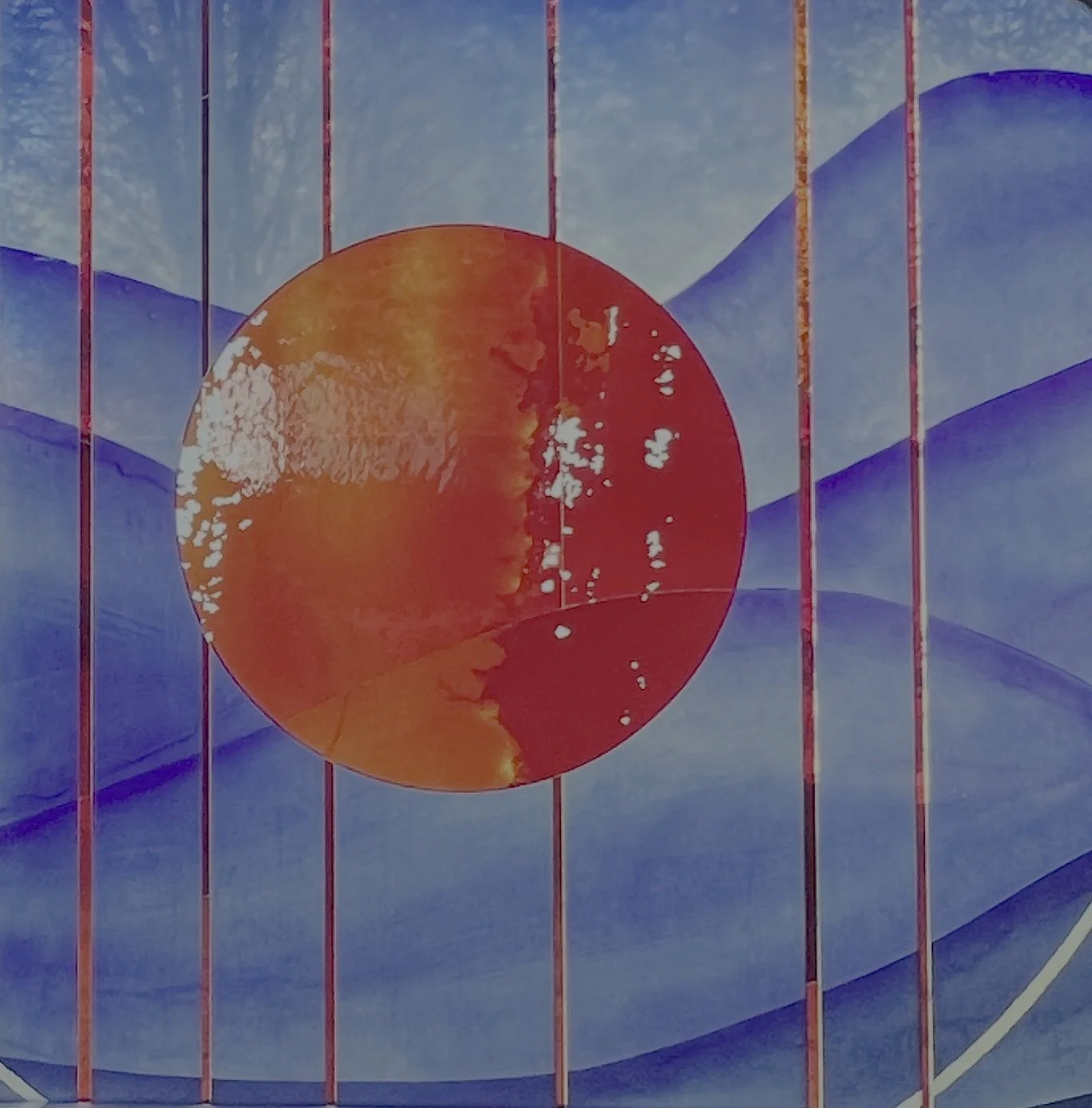
Photo by Cristina S. Schmalisch
I recently had a truly enlivening conversation with Lindsay Vatterott, which is being released today as an episode of her podcast, Live Like Eden (linked at the end of the post). It was really fun talking with a fellow Course student and we covered a lot of ground in and around the teachings of A Course in Miracles. Talking with Lindsay gave me some food for thought about walking along the spiritual path. It’s been over a year since my last post, and I feel inspired to put words to thoughts and experiences that I have been having since then.
Losing my beloved dog, Wall-E, has made a deeper impact than even I imagined that it would. I still miss him every day, and at times I still feel grief and loss that is about the same as when he first died. I also feel incredible love, joy, and gratitude just thinking about him. What I have been doing with these feelings, both positive and negative, is using them to practice the principles of A Course in Miracles. Thoughts of Wall-E spark what I think of as, “The Great Longing.” I long to be reunited with Wall-E, of course, but I also use this profound sense of longing to remind me that it is far greater than my relationship with him. It is representative of the enormous pain of believing we separated from God and left Heaven, our natural state of Oneness and Love. Similarly, when I get in touch with the deep love I felt and feel in relation to Wall-E, I broaden this feeling to include: people, other animals, inanimate objects, and even whole cities, the ocean, or the night sky. I practice thinking of this love as representative of Heaven, God, our Source, and our true Identity (which are all the same). I can only approach this vastness without fear for moments at a time, and the rest of the time, I practice with something specific that I can hold in my mind and heart without fear.
A Course in Miracles is completely uncompromising about our natural state of abstract Love, Peace, and Joy. Our non-dual nature is spoken of in the Course many times. For example,
Love:
This is a course in miracles… ⁶[It] does not aim at teaching the meaning of love, for that is beyond what can be taught. ⁷It does aim, however, at removing the blocks to the awareness of love’s presence, which is your natural inheritance. ⁸The opposite of love is fear, but what is all-encompassing can have no opposite. (T-in. 1:1, 6-8)
Perhaps you think that different kinds of love are possible. ²Perhaps you think there is a kind of love for this, a kind for that; a way of loving one, another way of loving still another. ³Love is one. ⁴It has no separate parts and no degrees; no kinds nor levels, no divergencies and no distinctions. ⁵It is like itself, unchanged throughout. ⁶It never alters with a person or a circumstance. ⁷It is the Heart of God, and also of His Son. (W-127.1:1-7)
Peace:
That is why the Bible speaks of “the peace of God which passeth understanding.” ¹⁰This peace is totally incapable of being shaken by errors of any kind. ¹¹It denies the ability of anything not of God to affect you. (T-2.II.1:9-11)
Can you imagine what it means to have no cares, no worries, no anxieties, but merely to be perfectly calm and quiet all the time? ²Yet that is what time is for; to learn just that and nothing more. (T-15.I.1:1-2)
Joy:
The light that belongs to you is the light of joy. ⁵Radiance is not associated with sorrow. ⁶Joy calls forth an integrated willingness to share it, and promotes the mind’s natural impulse to respond as one. (T-5.in.1:4-6)
My holy brother, think of this awhile: The world you see does nothing. ²It has no effects at all. ³It merely represents your thoughts. ⁴And it will change entirely as you elect to change your mind, and choose the joy of God as what you really want. ⁵Your Self is radiant in this holy joy, unchanged, unchanging and unchangeable, forever and forever. (W-190.6:1-5)
The implication of our natural state is that we are not bodies; we only think we are, but it is as if we are dreaming. We do not reside in the physical world; we only think we do. Instead, the Course describes us all as being “…at home in God, dreaming of exile but perfectly capable of awakening to reality.” (T-10.I.2:1)
The question, then, is: do we want to wake up? For me, the answer is still, “Yes and no.” For decades, I found the idea of death truly frightening. Wall-E’s passing and the experiences I have had with him since then have healed a lot of that fear (to read more, go to my last post, “Making Our Way Home.”) Now, instead of fearing death of the body, I find the idea of disappearing into the heart of God truly frightening. The completely abstract is frightening to me. The idea of eternity with no specifics and no “other” to relate to scares me. Intellectually, I believe that the experience of this is only joyful. My fear, though, tells me otherwise. As a result, I can read passages like the above describing our ultimate, non-dual reality in a dual manner. I imagine a very peaceful and calm me, or a very loving me that makes no distinctions between the objects of my love. In this imagining, I relate to someone or something, rather than being Love and nothing else, Peace and nothing else, and Joy and nothing else.
What I find myself curious about, then, is what happens once my body dies? My expectation is that I will still have some fear and will not have fully remembered my/our true nature. My best guess is that I—and perhaps most of us—will have some continuity of consciousness once we transition from a physical body living in a physical world to another experience. A Course in Miracles does not really talk about the non-physical world described by people who have had near death experiences and inferred from communications from what many refer to as “the other side,” but Course principles apply to these experiences too. Teachers of the Course, like Kenneth Wapnick and Gary Renard, reference the non-physical world many times. They make it very clear that to the extent that we are having dualistic experiences (that is, experiences as some kind of self, interacting with some kind of other), including experiences not tied to a physical body in a physical world, we are still having illusory experiences.
The non-physical world, or the other side, is very often described and experienced as wonderfully loving, incredibly warm, and deeply connecting. Accounts in books like, Hello from Heaven, or given by people who have had near death experiences, again and again describe scenes that are extremely beautiful. These accounts convey enormous joy and the experiences seem to bring with them an enduring sense of well-being. It is no wonder that one way of referring to the other side is “heaven” or “the heavenly realm(s).” Nonetheless, this world and these realms are not Ultimate Reality. Reality is One. There is no separation and no interaction; there is only being. A passage from A Course in Miracles found in Workbook Lesson 169 is very clear about this:
Oneness is simply the idea God is. ²And in His Being, He encompasses all things. ³No mind holds anything but Him. ⁴We say “God is,” and then we cease to speak, for in that knowledge words are meaningless. ⁵There are no lips to speak them, and no part of mind sufficiently distinct to feel that it is now aware of something not itself. ⁶It has united with its Source. ⁷And like its Source Itself, it merely is. (W-169.5:1-7)
While I believe that this awareness that will eventually dawn on me and on all of us, I do not feel ready for it yet. In the meantime, I embrace the idea of a happier dream experience, whether as a physical body having dualistic experiences, or as a non-physical consciousness having dualistic experiences. I trust A Course in Miracles when it says that ‘time is for learning to be “perfectly calm and quiet all the time.”’ (T-15.I.1:2) I know from my own life that we can have experiences of this nature right here and right now; we don’t have to wait for some future time to feel more contented and more peaceful. The Course says, “Heaven is here. ⁵There is nowhere else. ⁶Heaven is now. ⁷There is no other time.” (M-24.6:4-7) Because it is a practical teaching, the Course tells us how to bring the awareness of Heaven closer and closer: “Forgiveness is the key to happiness.” (Lesson 121. Forgiveness is a big topic! For the Course’s answer to the question of what forgiveness is, go to ACIM, W-pII.1.)
As uncompromising as A Course in Miracles is about our reality as completely One with God, it is also very gentle. One passage I occasionally reflect on is the following:
Fear not that you will be abruptly lifted up and hurled into reality. ²Time is kind, and if you use it on behalf of reality, it will keep gentle pace with you in your transition. ³The urgency is only in dislodging your mind from its fixed position here. ⁴This will not leave you homeless and without a frame of reference. (T-16.VI.8:1-4)
I believe the Course when it says that I will not have an experience of being homeless through practicing forgiveness, not even once it is time to transition from my physical body. And so, I just keep practicing forgiveness, using whatever experiences come along and invite me to lose perspective, feel sad, angry, afraid, and so on. I fully expect that the learning gained through practicing forgiveness as a body in space and time will continue to be available on the other side. This learning will continue to serve a purpose until I—and we—no longer need it and become fully aware of having been in the heart God all along.
A Course in Miracles is published by The Foundation for Inner Peace. All the books comprising the Course, along with the supplemental pamphlets, are now found online:
All quotations of A Course in Miracles in this blog post are drawn from this version of the Course.
To hear the episode of Lindsay Vatterott’s podcast, Live Like Eden, that inspired this post, go to www.LiveLikeEden.com/Podcast-episodes/Cristina-Schmalisch or on YouTube (audio only, with closed caption), https://www.youtube.com/watch?v=n0pxsRiW684.